

The cost of an air conditioner can surge by hundreds of yuan due to fluctuations in copper prices. As Shanghai copper prices approach 100,000 yuan per ton, what should the air conditioning industry do? Many home appliance companies have provided an answer through "replacing copper with aluminum"—this transition has evolved from passive adaptation to proactive innovation.
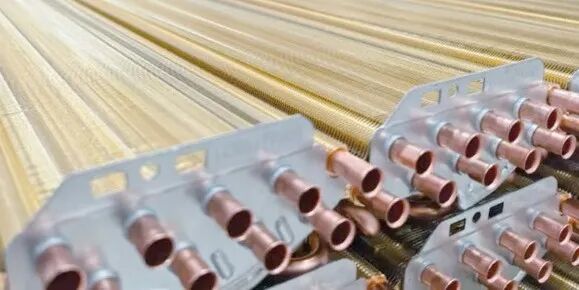
In December 2025, the "Self-Regulatory Convention of the Air Conditioner Aluminum Reinforcement Application Research Working Group," initiated by the China Household Electric Appliance Research Institute, marked a new phase of standardization and normalization in the industry's transformation, shifting from "each acting independently" to "collaborating to break through." The accelerated adoption of aluminum over copper stems from dual drivers: cost and resource considerations. With copper prices doubling since 2020, the cost of copper materials per air conditioner unit has risen by 400-600 yuan, while aluminum prices are only one-fourth of copper's, and domestic aluminum reserves are hundreds of times greater than copper's. After a decade of technological breakthroughs, the shortcomings of aluminum—poor corrosion resistance and low heat exchange efficiency—have been overcome: Midea reduced corrosion rates by 60% with rare earth aluminum alloys, Haier improved microchannel aluminum heat exchanger efficiency by 30%, Xiaomi products achieved a 2,000-hour salt spray test, and Class 1 energy efficiency became standard. Behind this self-regulatory convention is the collective effort of 19 core players. The working group includes leading air conditioner manufacturers such as Midea, Haier, Gree, and Xiaomi, as well as international brands like Panasonic and Daikin, along with research institutions such as Beijing Technology and Business University and the China Household Electric Appliance Research Institute. Large-scale applications have already taken root in the market, exhibiting a "gradual penetration" characteristic. Mid-range and lower-end models priced below 2,000 yuan have become the primary battleground, with 1.5-ton air conditioners like Hualing Giant Power Saver and Xiaomi Giant Power Saver Pro adopting aluminum heat exchangers and selling for around 1,600 yuan. Export models see even broader applications, with 40%-50% of air conditioners in the Japanese market featuring all-aluminum heat exchangers, and Midea's North American export models already mass-producing microchannel aluminum heat exchangers. Meanwhile, high-end models priced above 3,000 yuan still retain copper core components to meet extreme environmental requirements. As the new national standard discussion meeting in January 2026 approaches, material and process standards for aluminum replacing copper will be further clarified. This transformation not only benefits consumers with price reductions but also drives annual copper consumption reductions of 770,000 tons in the industry, lowering reliance on imports. From cost-driven adoption to technological autonomy, the shift to aluminum in air conditioners has entered the fast track of high-quality development.